
 FLASH SALE: 20% OFF all courses sitewide! Use code SUMMER20 at checkout.*
FLASH SALE: 20% OFF all courses sitewide! Use code SUMMER20 at checkout.* *for online bookings only
Value for Money
Select the training option that suits you best—whether it’s in-person, online, or through e-learning!

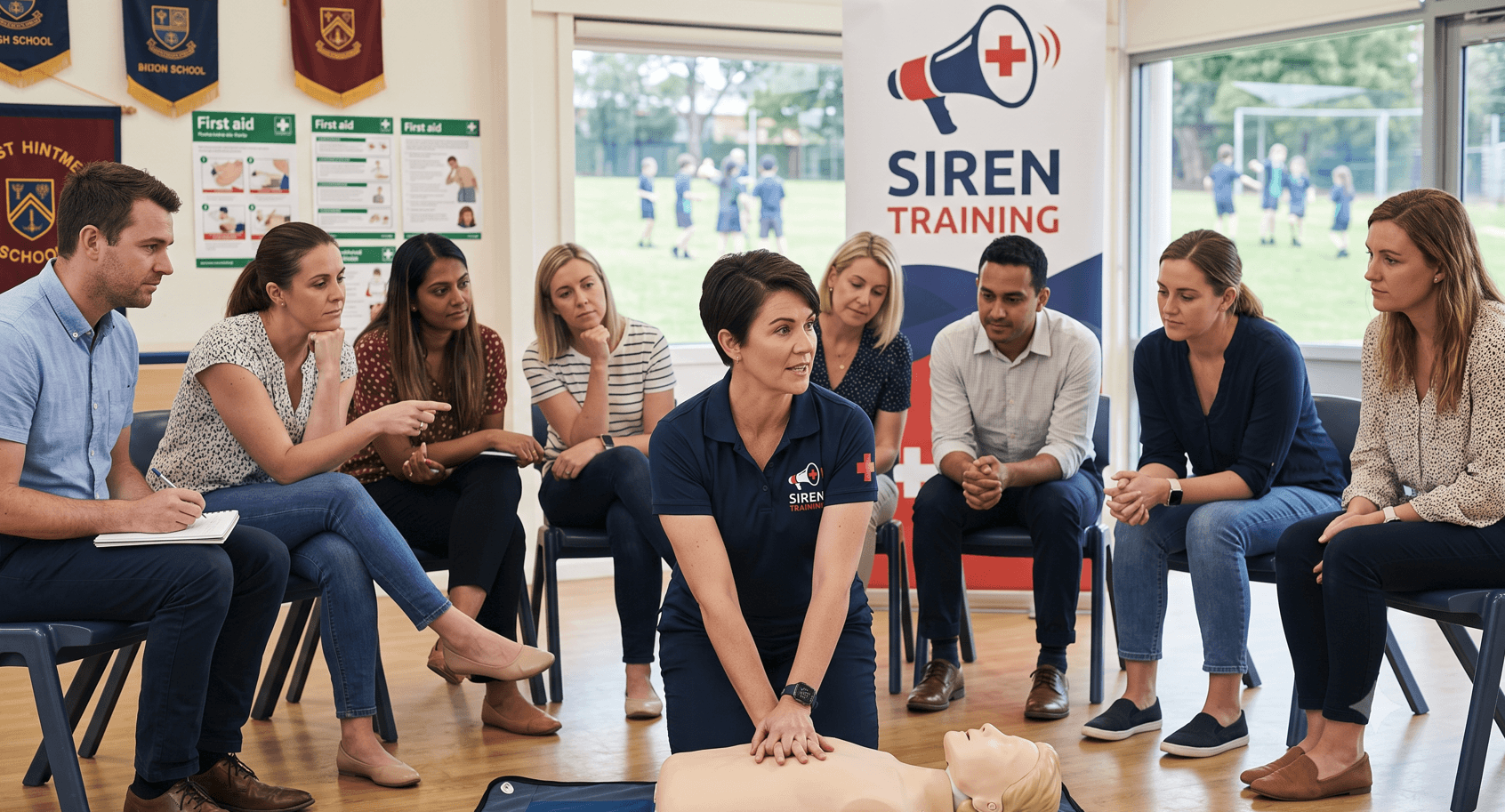
Our expert instructors travel to your school, delivering hands-on training to your team in their own environment.
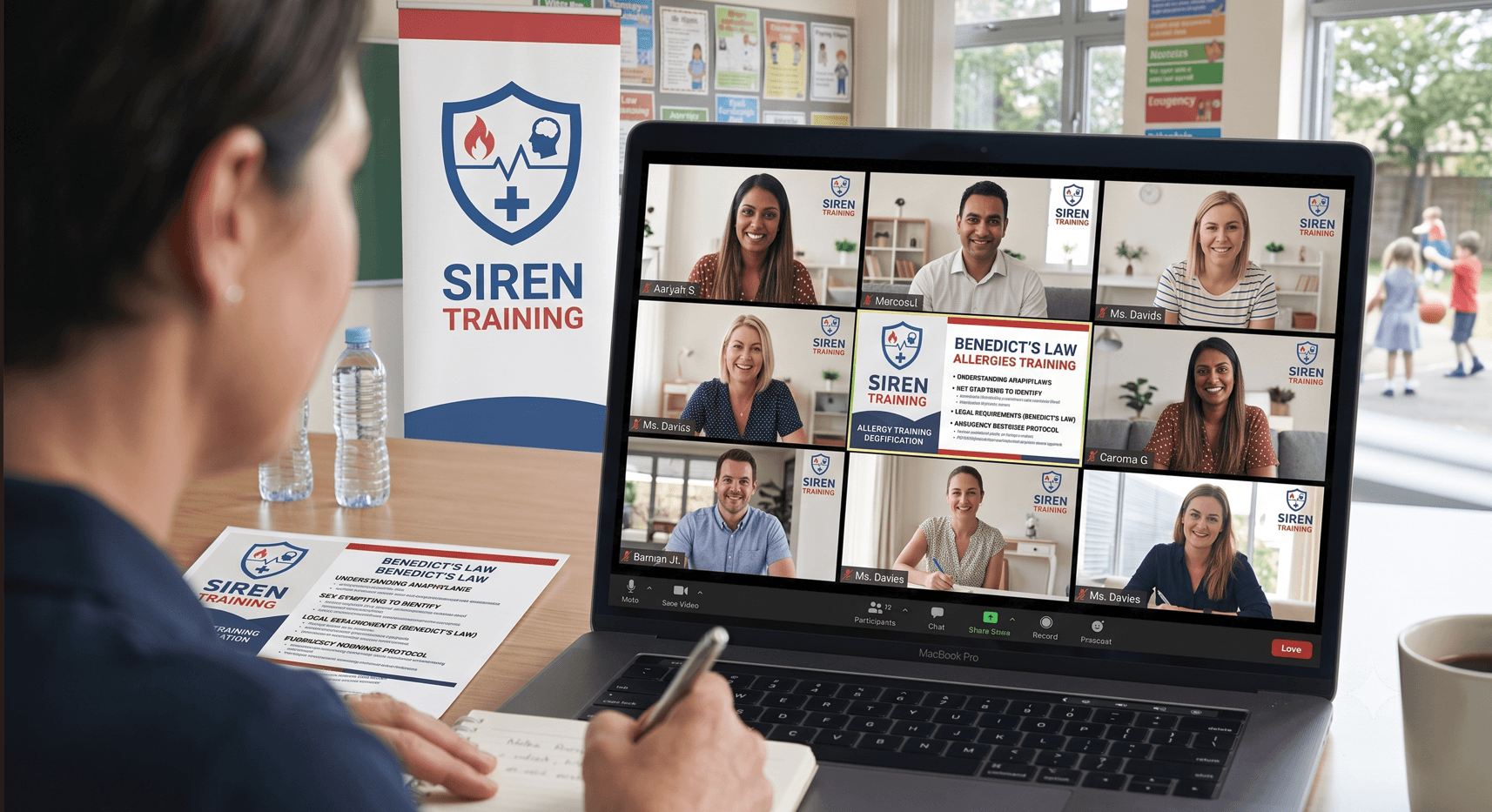
Live, interactive sessions delivered via Zoom or Microsoft Teams.

Self-paced modules perfect for onboarding new staff or refreshing knowledge
At Siren Training, we understand that schools are busy environments. We offer flexible, high-quality training solutions tailored to your operational needs.
Upon successful completion, learners receive a Siren Training Benedict’s Law & Allergy Management Certificate.
Continuous observation by the trainer during practical elements, followed by a short multiple-choice
Anyone working in an educational or childcare setting (Schools, Nurseries, Colleges, MATs).
Staff will leave feeling confident in their ability to prevent allergic reactions, manage medical conditions effectively, and save a life in an anaphylactic emergency.
With new statutory requirements coming into force in September 2026, protecting children with allergies is no longer just best practice—it is the law. Siren Training’s comprehensive Benedict’s Law Awareness & Allergy Management Training ensures your school, academy, or nursery is fully compliant, confident, and prepared to save lives.
Our expert-led courses cover everything from recognising the early signs of an allergic reaction to safely administering adrenaline auto-injectors (AAIs). Don’t wait for the deadline. Equip your staff with the knowledge and practical skills they need today.
Benedict’s Law represents a landmark shift in how schools across the UK manage allergies and medical conditions. Named in memory of five-year-old Benedict Blythe, who tragically lost his life to a severe allergic reaction at school, the law replaces previous non-statutory advice with strict, mandatory legal requirements for all educational settings.
For years, allergy management in schools was inconsistent, leaving preventable gaps in safety that put thousands of children at risk. In the UK, allergy-related illnesses and medical appointments lead to approximately 500,000 lost days of learning every year. Following tireless campaigning by the Benedict Blythe Foundation, the National Allergy Strategy Group, and grieving families, the government has taken decisive action. Benedict’s Law ensures that no child is left vulnerable and no parent has to send their child to school fearing that a life-threatening reaction won’t be handled swiftly and correctly.
Under the new statutory guidance, schools must adhere to three core pillars of allergy safety:
The consultation for these stronger protections has concluded, and the new statutory requirements will officially come into force in September 2026. However, schools, Multi-Academy Trusts (MATs), and nurseries are strongly advised to begin implementing these changes, updating policies, and training staff immediately to ensure a seamless transition and immediate protection for their students.
While Benedict’s Law introduces vital legal compliance for educational institutions, its true value lies in human life. Allergies affect hundreds of thousands of children in the UK. A severe allergic reaction, known as anaphylaxis, can escalate from mild symptoms to a life-threatening emergency in a matter of minutes.
By embracing the requirements of Benedict’s Law, your school is doing more than ticking a regulatory box. You are building a culture of safety and inclusion. Proper training prevents panic, empowers teachers to act decisively, and provides parents with the ultimate peace of mind. When health and education work together seamlessly, children with severe allergies can participate fully in school life—from classroom learning to school trips—without fear or exclusion.
Allergy safety is a collective responsibility. The statutory guidance is clear: all staff need appropriate training. Our courses are specifically tailored for the education sector and are essential for:
Whether you are a small village primary school, a large secondary academy, or a multi-site MAT, Siren Training provides scalable solutions for your entire workforce.
Our Benedict’s Law Awareness & Allergy Management Training is an immersive, practical, and highly engaging course designed to translate government legislation into real-world classroom readiness. The syllabus is meticulously structured to cover every aspect of the new statutory guidance:
Leave your phone number below and we will call you back. If we do not call you back within 10 minutes, you will receive a 10% discount on your booking
*Our hours of operation are 9am-5pm.